

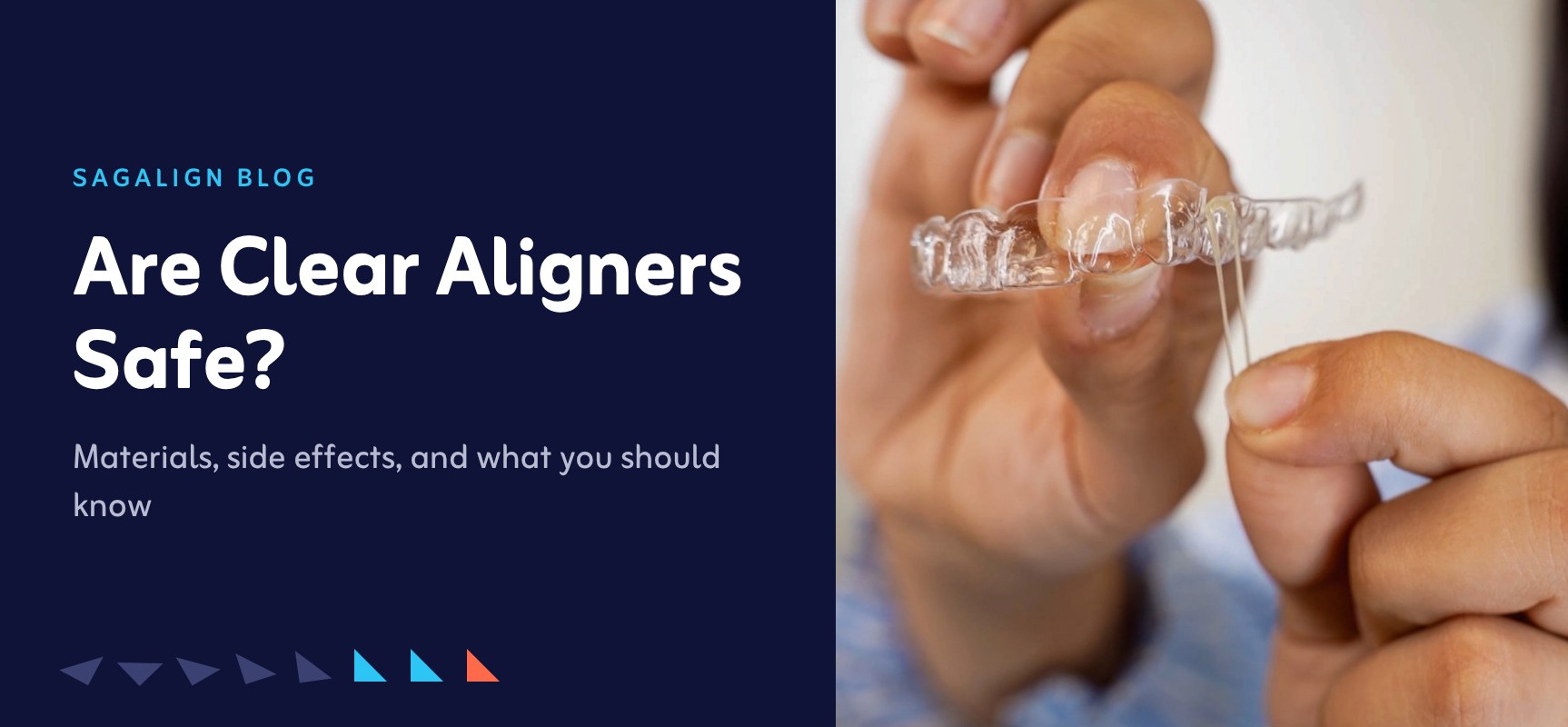
Wearing clear plastic trays over your teeth for 20–22 hours a day might make you wonder: Are clear aligners really safe?
What are they made of? Are the materials safe for your mouth? And can they affect your teeth or gums?
These are natural questions to ask before starting orthodontic treatment, and the good news is that clear aligners are a well-established, generally safe way to straighten your teeth when properly planned and supervised by a qualified dentist.
Beyond their discreet appearance and convenience, clear aligner safety depends on the materials used, personalized treatment planning, and proper oral care.
In this article, we'll explore clear aligner safety, including materials, biocompatibility, possible side effects, and simple ways to keep your teeth and gums healthy throughout your smile journey.
Are Clear Aligners Safe for Your Teeth?
Yes. Clear aligners are generally considered a safe orthodontic treatment when a qualified dental professional prescribes them, plans them properly, and monitors them.
They work by applying controlled forces to gradually move teeth into their planned positions. This process is based on the same biological principles used in traditional orthodontic treatment.
However, safe tooth movement depends on several factors, including the condition of your teeth and gums, the complexity of your case, and how your body responds to treatment.
Before starting, your dentist should evaluate your oral health and determine whether clear aligners are suitable for you.
The U.S. Food and Drug Administration (FDA) emphasizes that clear aligners require professional supervision and that treatment without appropriate monitoring can increase the risk of complications.
What Are Clear Aligners Made Of?
One of the most common questions patients ask is whether the plastic used in clear aligners is safe to wear inside the mouth.
Clear aligners are typically manufactured from specialized medical- or dental-grade thermoplastic polymers, selected for their flexibility, strength, transparency, and suitability for orthodontic applications.
Depending on the manufacturer, these materials may include:
- Polyurethane-based polymers: Used in certain aligner systems for their flexibility and mechanical properties.
- Polyethylene terephthalate glycol (PETG): A transparent thermoplastic used in various dental appliances.
- Multilayer thermoplastic materials: Designed to combine different mechanical properties within a single aligner.
Because aligners remain in close contact with the teeth and oral tissues for extended periods, material selection is an important part of their overall safety.
Not all clear aligners are manufactured from the same plastic, and the safety characteristics of one material should not automatically be assumed to apply to every aligner brand.
What Does Biocompatibility Mean?
You may come across the term biocompatible when researching clear aligner materials.
In simple terms, biocompatibility refers to how appropriately a material interacts with living tissues when used for its intended purpose.
For orthodontic aligners, this involves evaluating potential biological reactions associated with prolonged contact with the oral environment.
Depending on the material and intended use, biocompatibility assessments may examine:
- Cytotoxicity, or potential harmful effects on cells
- Irritation of oral tissues
- Sensitization or allergic reactions
- Chemical characteristics and possible material-related risks
International standards such as the ISO 10993 series provide a framework for evaluating the biological safety of medical devices.
Biocompatibility does not mean that a material is incapable of causing any reaction. It means that its biological risks have been evaluated in relation to its intended use.
Are Clear Aligners Toxic?
The word plastic can raise concerns, particularly when a material is worn inside the mouth for several months.
Research has therefore investigated whether clear aligner materials can release chemical substances or microscopic particles during use.
Studies have examined several areas, including chemical leaching, cytotoxicity, and the biological effects of different orthodontic polymers.
Most available laboratory studies suggest that many aligner materials demonstrate acceptable biocompatibility under the conditions tested. However, results vary between materials and testing methods, and long-term clinical evidence remains limited.
A 2026 review examining clear aligner materials highlighted the need for further research into long-term exposure and the potential release of material components during everyday use.
The important distinction is that detecting a substance in laboratory testing does not automatically establish that normal aligner use causes harm. The amount released, duration of exposure, and biological effects must all be considered.
At the same time, the absence of demonstrated harm does not justify claiming that every aligner material is completely risk-free.
Do Clear Aligners Contain BPA?
Bisphenol A (BPA) is a chemical associated with certain plastics and resins. Because of concerns about its potential biological effects, patients sometimes wonder whether clear aligners contain or release BPA.
The answer depends on the specific material and manufacturing process.
Not all aligner plastics contain intentionally added BPA, but the composition and chemical release characteristics of individual products can differ.
Scientific studies examining BPA release from orthodontic aligners and retainers have reported mixed findings. Some laboratory studies detected very low or undetectable amounts, while other research raised concerns that require further investigation.
For patients concerned about BPA, the most reliable approach is to ask their aligner provider about the specific material used and whether supporting material safety documentation is available.
Can Clear Aligners Damage Your Teeth or Gums?
Clear aligners are designed to move teeth gradually, but like any orthodontic treatment, they are not entirely free of risks.
Potential complications are generally associated with factors such as oral health, treatment planning, individual biological response, and inadequate monitoring.
Tooth Sensitivity and Pressure
Feeling mild pressure or tenderness when starting treatment or switching to a new aligner is completely normal. It simply means your aligners are applying gentle, controlled forces to gradually move your teeth.
This sensation is usually temporary and becomes less noticeable as you adjust to each new tray. However, if you experience severe or persistent discomfort, contact your dentist for guidance.
Gum Irritation
Mild gum irritation may occur as you adjust to clear aligners, but it is usually temporary. If discomfort persists or causes cuts or swelling, your dentist can check the fit and make adjustments.
Tooth Decay and Gum Health
Clear aligners do not directly cause tooth decay, but poor oral hygiene can allow plaque and food debris to build up. Regular brushing, flossing, and avoiding sugary or acidic drinks while wearing aligners help keep your teeth healthy throughout treatment.
Root Resorption
Root resorption is a possible side effect of orthodontic treatment, including clear aligners, where a tooth’s root may become slightly shorter. The risk varies between patients, but proper treatment planning and regular dental monitoring help minimize potential complications.
Clear Aligners vs. Traditional Braces: Safety, Comfort, and Everyday Care
| Safety Consideration | Clear Aligners | Traditional Braces |
| Oral hygiene | Removable for normal brushing and flossing | Requires cleaning around brackets and wires |
| Soft tissue irritation | May cause irritation from tray edges | Brackets and wires may irritate cheeks and lips |
| Eating | Removed before meals | Certain hard or sticky foods may need to be avoided |
| Tooth movement | Requires appropriate planning and monitoring | Requires appropriate planning and monitoring |
| Patient cooperation | Depends heavily on consistent wear | Fixed appliances reduce dependence on daily wear compliance |
| Complex cases | May have limitations for certain movements | May provide advantages for some complex movements |
The safest option is the one that is clinically appropriate for your teeth, gums, and orthodontic needs.
How to Use Clear Aligners Safely: 5 Essential Habits
A few simple daily habits can help keep your clear aligner treatment safe, comfortable, and on track.
1. Follow Your Recommended Wear Schedule
Wear your aligners for 20–22 hours daily, or as directed by your dentist, and change trays according to your treatment plan.
2. Remove Aligners Before Eating
Always remove your aligners before meals. Drink only plain water while wearing them, and avoid hot beverages that could affect their shape.
3. Keep Your Teeth and Aligners Clean
Brush, floss, and clean your aligners regularly. Avoid hot water and abrasive cleaning products that may damage the trays.
4. Never Force an Aligner Into Place
If an aligner doesn't fit properly, contact your dentist rather than forcing it onto your teeth.
5. Attend Your Follow-Up Appointments
Regular dental visits help monitor tooth movement, check aligner fit, and ensure your treatment progresses as planned.
Clear Aligner Safety: What Patients Should Know
| Common Concern | What You Should Know |
| Are clear aligners safe? | Generally, yes, when properly prescribed and monitored. |
| Are clear aligners toxic? | Material safety varies; available research is generally reassuring for many materials, but long-term questions remain. |
| Do aligners contain BPA? | This depends on the specific material and product. |
| Can aligners damage teeth? | Complications are possible, making proper planning and monitoring important. |
| Can aligners cause gum problems? | Irritation can occur, while poor oral hygiene may contribute to dental and periodontal problems. |
| Are aligners safe to wear all day? | They are designed for extended daily wear according to the prescribed schedule. |
Frequently Asked Questions
Are Clear Aligners Safe for Long-Term Use?
Yes. Clear aligners are designed for extended daily wear and are generally safe when made from suitable materials, used correctly, and professionally monitored.
Can Clear Aligners Cause Allergic Reactions?
Allergic reactions are uncommon but possible. If you experience persistent irritation or swelling, remove your aligners and consult your dentist.
Are Clear Aligners Safe for People With Gum Disease?
Yes, in some cases. Gum disease should first be treated and stabilized before starting clear aligner treatment.
Can Clear Aligners Cause Permanent Tooth Damage?
Serious complications are uncommon with properly managed treatment. Professional planning and regular monitoring help minimize potential risks.
Are Clear Aligners Safe to Sleep With?
Absolutely! Clear aligners are designed to be worn overnight as part of the recommended 20–22 hours of daily wear.
About Sagalign Clear Aligners
Sagalign is a clear aligner system developed in Iraq by 3D Masters. Combining advanced digital orthodontic planning with custom-made aligners, Sagalign offers a discreet, personalized approach to teeth straightening.
With digital technology and local dental expertise, Sagalign helps patients across Iraq achieve straighter smiles through professionally planned clear aligner treatment.
A Straighter Smile Starts With the Right Care
Clear aligners offer a generally safe, comfortable, and effective way to straighten your teeth when supported by suitable materials, personalized planning, and professional supervision.
Ready to start your smile journey with Sagalign? Connect with a Sagalign-certified dentist to discover whether clear aligners are right for you.